Showing posts with label LIVE right. Show all posts

The rate of childbirth in developed societies is declining, but the number of people turning to pets, sometimes termed as "fur children", are on the rise. Pet ownership used to be a symbol of wealth; pedigrees from the pet shops and their upkeep do not come cheap, but as more animal lovers turn to adoptions and rescues, pet ownership has become more affordable than before. And fortunately, the increased appeal of pets is justified; having one or a few animal companions at home has health benefits.

According to the Centers for Disease Control and Prevention, pets can decrease blood pressure, cholesterol levels, triglyceride levels and feelings of loneliness. Indeed, after a rough day, cuddling your animal friend is enough to drive your frustrations away and calm you down. The act of stroking fur is therapeutic and soothing, and little wonder that animals like dogs, cats and horses have been used for Animal-assisted therapy to take the blues out of nursing home occupants and mental health patients. People who are going through a rough patch in life, like a divorce or passing of a close one, often find comfort and solace from their pet.

Having pets, especially dogs, motivates you to be more physically active, because it is a must to take your dog out on daily walks. Naturally, being active keeps your cholesterol levels down. You'd be heading to the parks more often, or going for hikes, and the fresh air and greenery are certainly the added bonuses for better health and mental well-being. In addition, pets are a great ice breaker among pet owners and animal lovers, opening up opportunities to socialise and even date. And if you look online, pictures of dogs, cats, and other cute animals are always popular among netizens. Possible tickets to online fame aside, a friendly comment or message could spark a friendship between two animal lovers.

Perhaps for the animal lovers, what makes caring for an animal so much more engaging than other hobbies is the fact that it is human nature to want to feel needed, that they are responsible for something important. Taking care of a living thing is a stimulating and rewarding experience that few other hobbies can afford. After all, as veterinary consultant for Good Morning America and author of Your Dog: The Owner's Manual says, "A lot of it goes back to reducing stress: You might lose your job, your house, your 401(k)—but you'll never lose the unconditional love of your pet."


For someone dealing with chronic pain, the presence of pets reduces anxiety. According to a study from Loyola University, people who used pet therapy while recovering from a surgery may require significantly less pain medication than those who did not.

Young children too benefit significantly from growing up with animals. Learning responsibility aside, WebMD points out that exposure to animals from a young age have reduced risks of sustaining allergies and asthma. It would also improve the conditions of children with Autism and Attention Deficit Hyperactivity Disorder (ADHD). The soothing sensation of stroking a furred pet is calming to autistic children, while pet care encourages ADHD patients to focus on a predictable routine.

In fact, the health benefits of pet ownership are so apparent that Midland Insurance Company of Columbus, Ohio is more partial towards insuring clients over age 75 if they have a pet.

But before you run out to get yourself a pet, bear in mind that a pet is a heavy responsibility and you must be able to give it adequate care and housing for the entire duration of its lifetime. Pet abandonment is a significant problem in Singapore, and you would do well not to contribute to it. While per ownership is not necessarily a luxury, one must bear in mind costs of a life time supply of food, vet visits as well as the initial expenses for making the house pet-friendly. Like humans, your pet can suffer from health problems, and you will have to take it for regular health check ups to ensure your pet leads a long healthy life. You should do plenty of research and make sure you have comprehensive information about the animal you wish to have in order to make an informed decision.

Moreover, you should evaluate your own circumstances carefully and choose a suitable pet. An elderly person would likely do better with an adult cat that is independent and requires less attention and energy to care for, rather than an excitable puppy.

Never enforce pet ownership on someone else. Don't "surprise" your elderly parents with a pet unless you have spoken with them and are sure that it is a decision that they would welcome.

If you have not interacted with the animal of your choice, it would be advisable for you to do so before making the big decision of adopting. You can volunteer at animal shelters or care for your community animals. If eventually you feel that pet ownership is not for you, you still have these options to fall back on, and it would be a rewarding way of contributing to the community while enjoying those furry bundles of joy.

Sources:
http://www.webmd.com/hypertension-high-blood-pressure/features/health-benefits-of-pets#2
http://www.animalplanet.com/pets/no-1-keep-your-chin-up/
http://www.womansday.com/life/pet-care/a2352/10-health-benefits-of-owning-a-pet-116238/
https://www.cdc.gov/healthypets/health-benefits/index.html

https://www.cdc.gov/healthypets/health-benefits/


Image from Flickr

For many travelers these days, a common concern is remaining connected. It has almost become a must for lodgings to provide free Wifi in order to remain competitive. Portable wifi or data sim have become a common travel-related expenditure. Many countries have wifi spots at places of interest to attract tourists.

Indeed, having internet connection on the go is very useful especially for those who travel free and easy. You would be able to rely on online navigation tools like Google maps, look a train timings, check out recommendations for good eating places near your location and so forth. Then there are the travel bloggers who provide daily or even 'live' updates of their adventures.

On the other hand, there are also the people who feel compelled to remain connected for reasons not related to travel. These are the people who have to check their work emails every so often, or who feel the need to see what their friends are doing on social media at the expense of being distracted from their own travels.

With connectivity becoming a need rather than a luxury, "digital anxiety" though not yet an official condition, is becoming a real concern among the technologically advanced countries, or a "first world problem". As the term suggests, a person with digital anxiety feels anxious to be separated from his or her communication devices. Apart from feeling stressed and being unable to focus, they may scratch or fidget, behaviours attributed to anxiety.

It is not as serious as addiction; most people with digital anxiety would agree that they should spend less time on their gadgets, but they find it difficult to execute this without breaking out a sweat over it. Much time and productivity is wasted each day as one succumbs to the urge to check out every notification from the phone or scroll through their social media feed every few minutes and add their own status updates to the feeds. It's as though one's hand and their phone are of opposing poles.

Staying connected is certainly not a bad thing. It is a convenient way to keep up to date with what all your friends and family are up to, even the ones you don't get time to hang out with often. Many people use social media to extend invites for outings and gatherings. Certain jobs and identities require a well-curated and active social media account. Moreover, social media is also a platform for entertainment and knowledge.

However, if you feel that you are no longer deriving fun and relaxation, or reading things that are worth reading (it seems that now every article shared on social media must be questioned for authenticity due to the proliferation of falsehoods), or worst, you're wasting your time arguing with people online or justifying your stand, then it's definitely time to cut back.

Being able to cease social media usage altogether, commonly termed a 'digital detox' would be the best-case scenario if you do not actually use it for anything concrete. You do not have to stop using it completely, but short periods of detox every now and then, for example, during a weekend or while you're on vacation, can help you be more in control of your impulses and appreciate life without social media. You can do this by uninstalling the relevant apps or even turning off your internet connection.

Another practical solution is to get to the root and analyse your motives for using social media, and then think about whether you are in fact achieving your goals through social media. Apart from entertainment and knowledge, many people use it because it helps combat loneliness. The thing about social media is that it gives one a sense of belonging without requiring that individual in-person interaction. Social media enables you to connect with like-minded people over topics you care about, and when you share your status updates, photos etc with people who "like" them, that gives the feeling of validation. While some people discover life-long friendships this way, few people would concur that they consider every follower on their social media account as "friends". Interactions online are also often artificial. People "like" your post in hopes for receiving a "like" back, rather than because they really appreciate it. Why should you waste time impressing people whom you don't consider to be your friends?

Just like getting rid of an addiction, achieving control over social media usage is challenging. Don't be too hard on yourself if you find yourself constantly grabbing your phone. Old habits die hard, but keep trying and you will eventually succeed, and the feelings more empowering than garnering a bunch of "likes" from people who don't really matter.


Image from Pixabay
 
Jason Chee really has it tough. He first made headlines in 2012 when he lost his left arm and both legs in a ship accident while serving in the navy. Subsequently, he trained in table tennis, represented Singapore as a para-athlete and has even won medals. Unfortunately, he has been dealt another setback, this time in the form of eye cancer. Due to the size of the tumour (larger than 1cm), radiotherapy would not work, so his only option was to undergo surgery to have the entire affected eye removed. Nevertheless, the brave man is taking it in stride, and has gone back to training in table tennis with the use of one eye.

Eye cancer, or choroidal melanoma / eye melanoma, is rarely talked about in Singapore, compared to cancers like breast cancer and lung cancer. That is because it’s more common in Westerners, but low risk does not mean no risk, as demonstrated by Jason’s situation.
There are no known specific causes of eye cancer, though as with most cancers, genes play a role. Risk factors include:
o       Light eye colours such as blue and green
o       Being white
o       Increasing age
o       Certain inherited skin disorders
o       Exposure to UV light

Eye cancer usually does not have any symptoms, which unfortunately makes it difficult to diagnose until it gets serious. If there are any symptoms, they usually include:
  • Growing dark spot on the iris
  • Flashing lights sensation
  • Change in the shape of the pupil
  • Poor or blurry vision in one eye
  • Loss of peripheral vision
  • Sensation of flashes and specks of dust (floaters)
These symptoms are also present in other types of eye problems and may not necessarily hint at eye cancer. Nevertheless, you should take immediate steps to seek further diagnosis as it could make a difference to your ability to retain and protect your vision. Regular eye examinations can help detect early abnormalities in the eye.

Eye cancer has the ability to spread to other organs, and so it is certainly important to seek immediate treatment and further examination. As Jason says, “I had a full body check and thankfully the cancer had not spread to my other organs. It was very good news and I felt very happy.”

Often when our loved ones or ourselves come down with a major illness or cancer, the first reaction is usually, and understandably, “Why me?” Often, we question the causes, whether there were signs, was it our own fault for overlooking them or increasing our risk exposure. Nevertheless, despite the fact that the methodologies for detecting and treating cancers and other rare illnesses have been improving rapidly, thanks to investments in research and technology, certain illnesses remain a mystery in some ways. 

If life should deal us a tough hand, the only way is forward, with a positive mindset.
"I'm only left with my right arm. Now, I'm only left with my left eye. You only live once, so I live life to the fullest and be happy day by day."

Certainly, Jason’s grit and determination makes him a role model and inspiration for everyone. Although his surgery was just about three months ago, he is already training hard to adapt to his one-eye vision for the ASEAN Para Games, held in Kuala Lumpur from Sep 17 to Sep 23. I wish him the very best.


With plans to make Orchard Road smoke-free by 2018, Singapore looks well on track to become a smoke-free nation. Since 30 June, there will be five designated smoking areas - Behind Somerset MRT station, Cuppage Terrace, Far East Plaza, Orchard Towers and The Heeren. But it won't be the entire area or shopping centre that allows smoking of course. The property owners are to set up designated smoking areas within their properties, complying with guidelines set out by the National Environment Agency (NEA). Existing smoking corners at food establishments along Orchard Road will eventually be banned from July 2018.

This has resulted in quite a hot debate online. The move has garnered plenty of praise, but also just about the same amount of complaints. This is rather worrying as it appears that the number of smokers and people who support smoking in Singapore is quite significant.

The hazards of smoking and second-hand smoking are already well-documented. But smoking has ways to make smokers overlook even the most dreadful health warning pictures on the cigarette packaging. To effectively reach out to the more stubborn smokers who cannot be deterred by costs or nightmarish pictures about their lungs turning black, it is important to understand the reasons why people smoke. For young people, especially those in their teens, it is usually attributed to peer pressure and the desire to look cool and mature. Smoking also relieves tension and improves mood due to chemical actions of nicotin. But this is only temporary and the stress will come back shortly after, along with the urge to smoke again. This is why some people easily smoke up to an entire pack of cigarettes in one day.

Finding other more meaningful and healthy ways to combat stress would be a good distraction from smoking, but many people would give cite lack of time as an excuse. It seems much more fuss-free to light up a cigarette, especially at the workplace, a common source of stress, than to head to the gym to work it out of your system.

Quitting smoking is difficult, especially if it has been a habit for years. But you don't have to do this alone.Call Health Hub's ​quitline at 1800 438 2000 for their free counselling service. They will give you advice on other free/affordable resources you can tap on if necessary. Finally, if stress and misery are making you turn to cigarettes, you might also want to consider professional stress management as part of your quitting regime. Many clinics provide this. The Singapore General Hospital offers consultation and treatment. You can make an appointment via appointments@sgh.com.sg or 6321 4377.

Health problems and money issues (cigarettes are expensive) cause even more stress. Get help from the right places before you get caught up in a vicious cycle!


 "Soapy hot water" is often the recommendation for washing just about anything that needs to be sanitized of dirt, from hands to milk bottles to the laundry. Indeed, heat is often associated with germ extermination. This is because many harmful pathogens are unable to survive at high temperatures in water. It is why we cook our raw food at boiling point, or add boiling water to milk for the baby - to get rid of bacteria that might otherwise make us sick.


Since high temperatures help to destroy bacteria, does it mean that washing in warm or hot water is more sanitary than washing in cold water? These days, we have the luxury to pick between either as most of taps at the wash basins at home have options to switch quickly between hot and cold water. But perhaps only if you use boiling or very hot water would it really make a difference, and I'm sure no one would want to scald themselves to kill some bacteria. Besides, bathing in hot water can be very drying on your hair and skin.

Rutgers University-New Brunswick did an experiment, which proved that cool water is just as effective as warm water for getting rid of bacteria when washing hands. And this is good news because warm water uses more energy than cold water. Even the amount of soap does not really have an impact on the effectiveness of ridding bacteria, though studies are still being done on the type of soap that would be most effective.

On a related note, soap and water triumphs alcohol-based hand sanitizers, which should only be used if soap and water are not accessible. Moreover, it should have an alcohol concentration of at least 60% to be helpful, according to the Centers for Disease Control and Prevention.

What is more important when it comes to hand washing, is the duration spent on it, and how thorough you are. You should wash your hands for at least 10 seconds to remove a significant amount of bacteria. There's a set of detailed instructions on how to go about it, but rather than making things complicated, just remember this:

When lathering soap around your hands, make sure that it covers the entire surface of your hands, including the palms, back, and all over and in-between fingers. Then rinse off with water. The whole process should take around 20 seconds.


In the case of laundry, the temperature of the water you should use would actually be dependent on the material of your clothing. However, drying them under the hot sun would help to eradicate moisture and prevent mildew from setting in.


Common blood types in humans. Image from Pixabay

In some Asian cultures, blood type is a matter of significant interest, especially when it comes to dating, and “what is your blood type” would be one of the first questions your date would ask, if the information is not already on your public profile. Apparently, like the zodiac sign, certain blood types have specific personalities, compatible blood types, things they are good at, lucky days and so on.

Well, they certainly aren’t wrong about the importance of blood types, though they might have had the wrong focus. Or perhaps this is just a clever means of masking their true intentions of finding out one’s blood type. After all, health matters are highly personal, something you might seriously discuss only if marriage is on the cards.

While there is no scientific evidence that blood type has any bearings on personality, it certain reveals more than a thing or two about one’s health.

According to a research by the University Medical Center Groningen in the Netherlands, which was presented at the European Society of Cardiology congress, people with a non-O blood group have a slightly higher risk of heart attack and stroke. Non-O blood groups are people with A, B and AB blood types. It is thought that A, B and AB blood types may present higher levels of blood-clotting protein, causing arteries to become clogged more easily.


The research was done based on studies involving some 1.3 million people. Findings revealed that 15 in 1,000 people with a non-O blood group suffered a heart attack, compared to 14 in 1,000 people with blood group O. This also brings to mind an earlier study which suggested that people with the rarest blood group - AB - were most vulnerable to heart disease. Their risk of contracting it was 23% more.


Genetic factors have typically played a small role in increasing the risk of certain diseases, but the probability of contracting the disease is not definite. Your lifestyle plays a major role in contracting diseases. Though study author Tessa Cole called for blood groups to be considered in risk assessments for cardiovascular prevention, others believe that giving up smoking and eating healthily should remain the focus for heart disease prevention.

Aside from cardiovascular health, your blood type also possibly sheds light on other health matters:

According to journal Neurology, blood type AB may be more susceptible to cognitive impairment as they age. This means that they are more likely to have memory and thinking problems, and again, clotting factors and proteins in the blood could be an explanation for it.

Those with blood type A have a higher risk of contracting stomach cancer and stomach ulcers compared to blood types B and O (unfortunately that includes AB too), according to a study published in the American Journal of Epidemiology. It is hypothesized that blood types AB or A may have greater immune system reaction to the bacteria H. pylori in our guts. The prolific cell activity from it would have been a cause for the cancer.

Blood types O not only have a decreased risk for heart diseases compared to their A and B counterparts, they are also less likely to develop pancreatic cancer, according to the Journal of the National Cancer Institute. As with stomach cancer, it is possible that differing intensities of reaction to H. pylori could have been a reason for it.

With regards to influenza, or the common flu, this is what Dr. Peter J. D'Adamo, a physician well known for advocating the Blood Type diet (customising diets based on blood type with the firm belief that blood types contribute significantly to one’s state of health), has to say about the different blood types:

•    Blood type A: Overall has a great ability to generate a quick and substantial antibody response against influenza type A(H1N1) and especially A(H3N2). Their antibody response against influenza B is not quite as dramatic.

•    Blood type AB: Relatively poor ability to generate high antibody levels against any of the influenza viruses.

•    Blood type B: Reasonable, but not great ability to generate an antibody response against influenza A(H1N1). Against influenza B virus, blood type B has a significant advantage. The blood type B immune response happens much earlier and persists longer.

•    Blood type O: Relatively effective ability to generate antibody response against influenza A(H1N1) and A(H3N2) viruses. Antibody response against influenza B is not as dramatic as blood type B.

It would be prudent to note that these statements have not been evaluated by the U.S. Food & Drug Administration.


Additionally, people with type A blood are more likely to have higher levels of the stress hormone cortisol in their bodies, which means they get affected by stress more easily. O blood types on the other hand succumb to stress more easily. 

With all the luck that Blood Type Os have, perhaps that is why they may donate blood to most major blood types (O- can donate to all blood types) but only accept blood from Type O (O+ can accept blood from O+ and O-, while O- can only accept blood from O-). Life is as fair as can be after all.

Nevertheless, those with blood type AB should not be dismayed. The correlation between blood types and health conditions is a subject that scientists are still exploring and debating over. Hopefully, this article will encourage one in the higher risks groups to take proactive steps to reduce the health risks, such as leading a healthy lifestyle, cutting out on the vices and doing regular health check ups. Certainly, this is not a pass for Blood type Os to be complacent.


The bathroom is not where your phone should be

This is a strange resolution to make, but in 2017, I have decided that I want to be more prudent with the cleanliness of my smart phone. After all, smart phones are more contaminated than an office toilet seat, and even tablets, even more so than smart phones! According to the study by British company Which, one particularly dirty tablet was found to have 600 units of Staphylococcus aureus, commonly referred to as staph infection. This bacteria can cause a variety of diseases, including food poisoning and toxic infection. 600 units is a risky amount and would have been prohibited on a food handler. Yet many of us dine with our dirty phones at our finger tips!

Each day, our hands touch many surfaces that numerous people have also touched, leading to an exchange of germs. Some of us may clean our hands, but we don't think of cleaning our phones, and when we touch them, our hands get dirty again. Furthermore, bacteria thrive in warm places. Our phones are warm, and we keep them in warm, dark places like in our bags or pockets. Little wonder that they are a hotbed for bacteria.

Japanese mobile giant NTT Docomo recognises the potential severity of the situation, and has sponsored toilet paper at the Narita International Airport which can be used to disinfect your phone. If you visit the airport from now until March next year, you will see it installed in seven bathrooms.

But of course, maintaining the cleanliness of your phone should not stop at a one-time wipe in the bathroom.
To prevent your phone from turning into a further health hazard (as if all that talk about radiation isn't bad enough), you should clean it everyday, and if you're a heavy user, then a few times a day.

You can use a soft, slightly damp/moisturised lint-free cloth to wipe your phone, then use a dry lint-free cloth to dry it. Be careful not to get water or dampness into the openings on your phone. Alternatively, you can also purchase screen wipes made for phones. Alcohol-based cleaners, though effective for general hygiene, are not recommended, particularly for Apple products, as Apple has said that iPads and iPhones are susceptible to damage by alcohol.

Aside from cleaning your phone, practise good personal hygiene by not using your phone while on the potty. Surely you aren't going to miss much during those few minutes that are not spent looking at your phone. Refrain from touching your phone when eating. It's bad manners to do so anyway if you're eating with someone. If you must look at your phone, then be sure to have tissue or hand sanitiser with you, which you can use to clean your hands after touching your phone.

Good sanitation habits go a long way. Make them a part of your life as you start the new year.

Have a healthy 2017!


Having a good relationship with your family is important. Not only does it make life at home more interesting and fun, it is also good for health. If you have people close to you whom you can depend on in times of trouble and sickness, you can cope with your problems more easily, and are less likely to fall into depression. You also tend to be happier, and as we all know, happiness is a solution to longevity and good health.

Yet these days, the youngsters tend to prefer spending holidays with their friends and significant others. They would do dinners and count down parties outside of home, while parents consider the holiday a well-earned rest. But the holiday season is the best time for family get-togethers as it is a rare time when everybody gets time off work or school. It would be such a waste not to spend this precious free time together!

Parents may perhaps attribute this lack of interest to celebrate holidays with family to generation gaps and differing interests. Indeed, few parents would like to go to the foam party or clubbing with their children. But regardless of generation gap, family members should enjoy their time together and have strong bonds with each other. If you find yourself leading your life separately from your children, the problem may be more of a lack of communication than an age gap, and you should consider ways to mend the gap.

Here are some ideas to get you started!

1.      Studies have shown that children who regularly eat dinner with their parents have bigger vocabularies, earn better grades, are less likely to do drugs and less likely to be overweight than children who don’t. This is because they adopt interaction skills from their parents, as well as enjoy their parents' attention. Start making family dinners compulsory from the start of the holidays!

2.      The family that plays together stays together. If dinner is usually followed by the television, laptop and telephone, it’s time to pull the plug. There are board games and card games for every age and temperament, as well as creative games like charades and active games like Twister. Teenagers may groan, but which are they more likely to look back on nostalgically, the time spent staring at their playstation or defeating mum overwhelmingly at Monopoly?

3.       There is one common saying that every parent knows, "time flies". The baby you held yesterday has become an adolescent, and will be on his/ her own before you know it. You can’t catch time in a bottle, but you can watch it go. Don't spend all your time at work, or all your time in the kitchen. Set aside some time every night to interact with your child.     

4.        Give yourselves the gift of time. While all sorts of entertainment are available these days, from movies to theme parks, it is often time spent relaxing at home and doing activities together that we remember most fondly. Set aside some regular time with each other. Just one day per week or per month when the entire family says no to other commitments and just hang out together.

This year, arrange an interesting family activity for countdown night. Have a movie marathon at home, play card games and board games, game together as a family, go to Marina Bay to catch the fire works, just to name a few. Time passes quickly, and it helps to retain beautiful memories whenever you can.


Healthy nails indicates that we are in the PINK of health.

Physical beauty is defined by many factors, and one of the common criteria is neat and well-kept nears.

Our nails pay an important role in making an impression as their condition give subtle messages to about us. Poorly-groomed nails suggest that we are perhaps not very meticulous in our work.
Even if you’re donning a neatly pressed outfit, matching shoes and stylish bags, topped off with immaculate make-up, ugly nails can ruin your image, in the same way that brownish teeth of a habitual smoker does.

Unfortunately, we tend to neglect that our nails require daily care. As such, nails get uneven and dry cuticles and dirt accumulate, passing off the message that we’re dirty and untidy, regardless of how gorgeous our outfit can be.

Hence, many women and some men are turning to manicure and pedicure parlours to beautify their hands and feet, or purchasing DIY kits for trimming cuticles and applying nail polish. However, by directly exposing our nails to so many chemicals, our nails weaken over time, breaking, peeling or in the worst case scenario, to dropping off completely!

What exactly makes up a nail? Well, a nail is a hardened form of protein that protects the nail bed and enhances the sensibility of our fingertips.

Physical damage done to our nails through constant usage of nail polish or interaction with strong chemicals like washing detergents can lead to peeling of our nails. Chemicals like washing detergents, nail polish removers, nail polish and nail glue contain acetone that can dry out our nails, leaving them brittle.

More importantly, damaged, discoloured nails suggest heath problems. We must pay attention to our nails to  ensure that we are in the pink of health.
WebMD has some very useful tips on what different appearances of our nails suggest about our body:

Pale nails


The flesh under our nails are by nature pinkish. Very pale nails may be a sign of illness, such as:
• Anaemia
• Congestive heart failure
• Liver disease
• Malnutrition
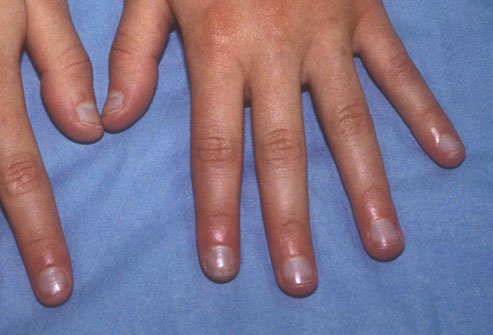
White nails


If nails are mostly white with darker rims, this can indicate liver problems, such as hepatitis. In this image, the fingers are also yellowish (jaundiced), another sign of liver trouble.


Yellow nails


One of the most common causes of yellow nails is a fungal infection. As the infection worsens, the nail bed may retract, and nails may thicken and crumble. In rare cases, yellow nails can indicate more serious conditions such as severe thyroid disease, lung disease, diabetes or psoriasis.


Bluish nails


Nails with a bluish tint can mean the body isn't getting enough oxygen. This could indicate an infection in the lungs, such as pneumonia. Some heart problems may be associated with bluish nails.


Rippled nails


If the nail surface is rippled or pitted, this may be an early sign of psoriasis or inflammatory arthritis. Discoloration of the nail is common; the skin under the nail can seem reddish-brown.


Cracked or split nails


Dry, brittle nails that frequently crack or split have been linked to thyroid disease. Cracking or splitting combined with a yellowish hue is more likely due to a fungal infection.


Puffy nail fold


If the skin around the nail appears red and puffy, this is known as inflammation of the nail fold. It may be the result of lupus or another connective tissue disorder. Infection can also cause redness and inflammation of the nail fold.


Dark lines beneath the nail


Dark lines beneath the nail should be investigated as soon as possible. They are sometimes caused by melanoma, the most dangerous type of skin cancer.


Gnawed nails


While you may think nothing about habitual nail biting, it could be a sign of persistent anxiety that could benefit from treatment. Nail biting and picking have also been linked to obsessive-compulsive disorder. If you can't stop, you should see a doctor.


Red / Black Nails


Red or black nails may be due to blood clot under the nail because of trauma, such as dropping something heavy on your toe or ingrown toe nails. To solve the ingrown toe nail problem, you should see a doctor. Red or black nails go away when they have grown out. If you do not experience pain or discomfort, in your toe, you can leave it alone.

Greenish nails


Green patches on nails are signs of fungal infection and are common among people whose fingers and toes come frequently into contact with water, such as homemakers and cleaners. This is because the Pseudomonas bacteria that causes this grows well under the nail plate due to moist conditions, and causes the infection.

Women who work most of the time with their hands and feet soaked in water and detergents are more likely to get infected with green nails.While it poses no immediate hazard, it can lead to swelling and pain, and damage to the nail. Fortunately, this isn't hard to get rid of. You can go to the pharmacy to get a precription in the form of creams and solutions to apply over it. A vinegar is also a commonly recommended home remedy for mild infections, which involves you soaking the infected nails in apple cider vinegar for a few minutes daily. However, if you see no improvement in your condition, do seek professional help.

Nail problems should not be ignored.  Many people take to nail polish or manicures to cover up discoloured or cracked nails. This is wrong as you may worsen the problem with the chemicals. Remember, beauty comes from within too. Hiding the problem does not make it go away. See a doctor if you must to set it right.

Written By: Veronica Tay

Sources:
http://www.livestrong.com/peeling-fingernails/
http://skincare.about.com/od/skincarefaqs/f/PeelingNails.htm
http://dermatology.about.com/cs/nailanatomy/a/nailanatomy.htm


Dizzy spells are often thought to be nothing to worry about, especially if they don’t linger. However, if you’re getting them very frequently, and you often feel dizzy when standing up suddenly, it is not a sign you should ignore.

People get dizzy spells, or the feeling of light-headedness, when their blood pressure drops and there is insufficient oxygen or poor circulation of oxygen in the brain. You get dizzy when you didn’t eat your breakfast and lack energy. You get dizzy when you’re dehydrated. You get dizzy when you didn’t get sufficient sleep. You get dizzy when you stand up too fast and the blood didn’t get to your brain in time. Usually, these are minor problems that are easily rectified, and it gives the delusion that dizziness is not something to really worry about. Indeed, a one-off dizzy spell should not be a cause of concern, but if it is happening frequently, it could be linked to dementia, according to researchers from the Erasmus Medical Centre in the Netherlands.

This research has been conducted for 24 years, on 6,204 people in their 60s or 70s who did not have dementia, for an average of 15 years.. The purpose was to examine whether people who had Orthostatic hypotension (also known as postural hypotension, a form of low blood pressure one gets when standing up) at the start of the study were more likely to get dementia than those who didn’t. Factors that might contribute to dementia, such as blood pressure, cholesterol levels, medicine use, smoking history and other illness were taken into account in the calculation of the chances of getting dementia.

Researchers noted an increased risk of 4% for people with postural hypotension compared to those without it. Despite the small percentage, many elderly people suffer from postural hypotension around the world, and thus this finding could have a significant impact. Nevertheless, the study only establishes a possible link between postural hypotension and dementia, and those who do suffer from it should not assume that it is a sure indication that they do have dementia. However, those who do get frequent dizzy spells from standing up should visit a doctor, and not simply cast it off as a natural occurrence with old age. Early detection is key to slowing down progression of the illness.

It is thought that constant fall in blood pressure and poor circulation of blood around the brain could contribute to dementia, which is characterized by a deterioration of brain activities, including physical changes to the brain. For now, research needs to continue to get a better understanding of Dementia. Current research suggests that ways to keep the brain healthy include not smoking, drinking in moderation, being mentally and physically active, having a balanced diet and keeping cholesterol levels at healthy levels. In other words, leading a healthy lifestyle.

Sources:

http://journals.plos.org/plosmedicine/article?id=10.1371/journal.pmed.1002143
http://www.nhs.uk/news/2016/10October/Pages/Blood-pressure-drop-on-standing-may-be-linked-to-dementia.aspx 


Early this week, the Department of Statistics (Singstat) revealed data to indicate that there have been more divorces and fewer marriages in Singapore last year. While characteristic of educated, developed populations in an era whereby divorcing and single parenthood have become more socially and legally acceptable, this undoubtedly poses greater challenges to our struggles to increase our replacement rate. 

Certainly, getting a divorce may be better for the emotional health of all parties if the marriage is unsalvageable. This is especially so if children are involved; the stress on keeping up the façade will not only cause plenty of tension but also give the children the wrong ideas about the norms of a healthy relationship.

Nevertheless, rather than going with the flow and accepting that divorce is a common phenomenon these days, we have to question if people are getting hitched for the wrong reasons, if they’re treating marriage to casually, and if they are putting in sufficient effort to keep a marriage going.

Much as we would like to believe that love is a substantial reason for marriage, it is not sufficient for a successful marriage and family in the long-term. Worst yet, I’ve encountered many people who rush into engagements with people they have not even been dating for a long time just because they want to own a BTO flat.

There is a saying that goes "Marriage is like a gamble". But life is short and why would you want to gamble away what is possibly the ripest time of your life on the wrong person? Certainly, there is no absolute guarantee for any relationship, and people do change. However, one can gauge the future of their marriage from the quality of their relationship before marriage.

Indicators of a successful, healthy relationship include:

Good communication.
Both parties are willing to listen to each other and discuss differences.

Realistic expectations from the relationship.
Someone who dreams of having a family complete with children would not be a good fit for someone who's really looking for a life-long travel partner to tour the world. Meanwhile, someone who enjoys taking risks and chasing dreams may feel restricted by a partner who craves stability and financial security. It is important to get to know one another's expectations before committing to each other.
.
The couple enjoy each other’s personality traits.
You don’t have to love every single thing about your significant other, but if the fact that your partner’s ability to leave mountains of mess around the house or poor financial management skills are grating to you, something needs to be done. One major peeve is enough to ruin a marriage if it is an issue that leads to constant arguments and dissatisfaction. Talk about it, and see whether being more accommodating, or making changes, or both, are in order. Never assume “Oh he/she loves me and I’ll be able to make him/her change”.

Ability to resolve conflicts effectively
Not only between each other, but also when conflicts arise concerning families of both sides.

Agree on religious and ethical values.
Differences in religious and ethical values have always been major sources of disagreement. If you can’t share similar views, or at least agree to disagree, they could become fuel in quarrels. Also bear in mind that these are issues that will be unavoidable in the child-rearing process and will give rise to conflict if both parents can’t agree on what values to impart to their children. 

Believe in egalitarianism in the relationship.
This means that both parties do not define roles in the relationship by gender. Neither partner is superior or has higher priority over the other, and their contributions would be viewed as having equal value to the benefit of the household or relationship. Dissatisfaction over the perceived amount of contribution from each party is a common source of unhappiness.

Have a good balance of joint and individual interests and activities.
We all need some personal time for ourselves. Spending all available time together means more opportunities for conflict. Moreover, both should have the freedom to pursue their own interests on an individual basis. Forcing someone to keep you company doing things he/she doesn’t enjoy is a sure-fire way of creating unhappiness.

That said, if you’re already in a marriage that is missing some of the above, don’t fret. All marriages require effort to maintain, some more than others. But as long as you and your partner treasure each other and do what you can to keep the marriage going, it will keep going. The most common mistake people make is taking their partners for granted. Think of marriage like a career that both you and your significant other share. There are hurdles to overcome, but the sense of satisfaction gained from achieving milestones is immense.

Indeed, a healthy, happy marriage goes a long way in enriching one’s life and emotional well-being. Moreover, it also serves as a form of insurance in old age when companionship becomes more important then ever. It is a great reassurance to know that there will be someone with you to walk till the journey’s end.


Eye drops are a godsend if you work full-day in an air-conditioned office, and spend most of your awake time looking at the screens of your PC and other mobile gadgets, like many a typical Singaporean.

Most regular eye drops, or artificial tears, are easily available at any pharmacy, and there are usually no clear instructions on the dosage. Most typically contain the rather unhelpful message of “as often as required”. Of course, too much of something is never good, especially when it comes to chemical products.

Is it possible to overdose on eye drops, or even develop a reliance on it? Can one reach a point when dry eyes become unresponsive to eye drops?

Happily, it is not quite possible to get addicted to eye drops. According to WebDM, it  is not possible to become overly dependent on artificial tears lacking preservatives. These eye drops contain harmless moisturizing substances and no medication, so they can indeed be used as often as required.

If you find that you have to increase the frequency of using eye drops, or you’re having to utilise it so extensively that it becomes intrusive to your lifestyle, you should seek medical advice from a doctor. In the case of severe chronic dry eyes, other more suitable treatments would have to be sought.

A frequent need to use eye drops can also be due to inappropriate administration, leading to wastage and inadequate lubrication. In a bid to save time, many of us tend to just drip the drops in, blink rapidly and go about with the task at hand. Often times, you may also find that some of the eye drops just roll down your face. Here are the right steps to administer eye drops so you maximize their usage:


1) Wash your hands before handling the eye drop container. Do not touch the tip of the dropper as you could contaminate it.

2) Tilt your head upwards, and aim the drop in the outer corner (away from the nose bridge) of your eye.

3) Don’t blink rapidly. That does not help with absorption of the drop, but will instead, pump the drop out of your eye. Blink normally, or simply close your eye.

4) Do not use tissue to dab at your eye. Instead, place a clean finger where the eye meets the nose bridge to keep the drop from draining.

5) One drop at a time! The eye only has the capacity to hold on to one eye drop. So take a break and close your eye after one drop, and only administer the next one when that drop has gone in. 


If you are wearing contact lenses, that restricts the types of eye drops you can use with it. Eye drops that can be used with contact lens will have something to the effect of this stated on the package: Safe to use with contact lens.

To improve your eye health and avoid relying on eye drops, it is important to give your eyes ample rest from all the electronics. When we are focused on staring at our screens, we tend to blink less and that causes your eyes to feel tired, dry and strained. Chronic dry eyes can be a major annoyance as they tend to feel tired, itchy and even painful throughout the day.

Every 30 minutes, stop your work, look away and close your eyes, or blink them at normal speed until they feel moist. Every hour, stand up, stretch, go to the window and look out at the trees. Not just your eyes, but possibly your entire well-being will feel better with these little breaks. Above all, never rub your eyes no matter how tempting it may be. It may feel momentarily satisfying, but you risk injuring your eyes.

Eye drops that relieve eye redness are a different matter altogether. Rebound eye redness is a side effect of overuse of eye drops intended to relieve eye redness. Over-the-counter eye drops reduce redness, but do not get rid of the cause of the redness, which could be due to inflammation, cornea scratch etc. Prolonged overuse of eye drops to relieve redness without solving the problem can cause permanent redness and damage to blood vessels in the eye. If your red eye persists for more than 24 hours with no improvement, it is advisable to see a doctor.


References:
http://www.everydayhealth.com/news/dos-and-donts-when-using-eyedrops/
http://www.livestrong.com/article/175250-side-effects-of-over-using-red-eye-drops/
http://www.webmd.com/eye-health/eyedrops-an-ocean-of-uses?page=3


“Pooping once everyday is a must for good health,” many well-meaning health enthusiasts are fond of this advice. Myself included, before I learned that this is a misconception.

Some people who are unable to clear their bowels on a daily basis spend every a stressful morning sitting on the toilet bowl, wondering why they can’t go despite drinking a lot of water, eating fruits and vegetables, and even diary products. In fact, if you do not have constipation, then you actually have nothing to worry about.

According to Medical Daily, toilet habits fall into two types:
1) Going at the same time daily (usually morning), and in the same toilet if available
2) Goes less frequently, with no fixed pattern

Both are normal, and none is healthier than the other. Anything in the range of thrice a day or thrice a week is healthy enough.

You should only be concerned if you encounter the following:

•    Faeces are too hard, causing pain and difficulties in coming out. This might be a sign of constipation, piles or something more serious.
•    Faeces are too loose, which could be a sign of diarrhea
•    Sudden change in toilet habits e.g. going from once a day to once every three days. Perhaps you’ve been drinking less water than usual?

Changes in bowel movements can of course be attributed to other factors. Someone on a vacation may not go to the bathroom as often as he usually does due to a change in dietary and exercise habits. Additionally, some menstruating women may experience an increase in amount of bowel movements during their period due to the release of the Progesterone hormone.

If you feel that you aren’t getting as much bowel movements as you should, reviewing your diet is one of the first things you should do. It is a common misconception that lots of dietary fibre automatically equates to better clearance of the bowels. This is only true to a certain extent, because you also need to drink lots of water on top of consuming generous helpings of fruits and vegetables. Otherwise, your large intestine becomes akin to a blocked drain; both require water to move the waste along. Additionally, people who don’t eat a lot will naturally have less waste to clear out.

There’s probably a very sound reason why the need to go to the bathroom is described as nature’s call. So let nature run its own course, and don’t stress yourself needlessly over your irregular bathroom habits. Most of all, never administer laxatives (something known as colon cleansing) without a doctor’s direction. This is usually unnecessary as the body is equipped with its own cleansing mechanism.

However, if pooping causes pain or discomfort, as well as presents unnatural symptoms like blood and strange colours in stools, then it is definitely time for a visit to the doctor. Chronic constipation can eventually lead to colon cancer. Never ignore the signs and protests from your body!


Gone are the days when cosmetic surgery was taboo. Partially due to the influence of social media with apparently well-meaning bloggers presenting their latest plastic surgery procedures in the form of tutorials, young women observe the results with envy and intrigue, rather than disdain.

I would be lying if I said I have never been tempted by the flawless large-eyed pixie-faced selfies frequently circulated all over Weibo, instagram and the like. But what keeps me from developing further interest in the subject matter are the stories of cosmetic surgeries gone wrong, such as in the case of one local blogger whose breast implants ruptured and her chin implant infected last month. And if you do a quick google search on plastic surgeries gone wrong, the squeamish might have to skip lunch today. Call me conservative, but I think going against nature and inserting foreign objects in your body for the sake of non-lasting beauty is simply asking for health troubles, if not at the current moment, then many years down the road. So many complications can arise from a simple infection!

Nevertheless, some people are willing to put up with the pain and potential risks, and certainly, they are free to do as they desire. But are you completely aware of all the potential risks that come with plastic surgery? Many of us are so easily blinded by achievements that we forget the troubles and sacrifices one has to go through to attain them. Furthermore, it is human nature to trumpet our achievements but keep mum about failures, so we are exposed to more success stories than failures in plastic surgery. With the ages of girls desiring plastic surgery getting younger, creating awareness about the potential risks of plastic surgery really needs to take a front seat.

Here are some common mistakes people make when they plan to go under the knife:

Forgetting that scarring is a thing

It seems ironic that procedures meant to beautify the body could do the opposite. The fact is, plastic surgery is invasive, like all other medical surgeries, and could potentially leave scars, notably major procedures like tummy tucks and breast augmentation. Aside from the doctor’s skill, genetic factors also come into play. For example, people with darker complexion and high skin pigmentation have a higher tendency to get obvious post-procedure scarring. To avoid or reduce the impact of post-procedure scarring, do consult your doctor on all the after-care precautions you should take.

Taking doctor’s credibility for granted in an unfamiliar place

Many beauty fanatics head overseas to places like Korea and Thailand for plastic surgery these days because the procedures are cheaper than done locally, bloggers recommend them, and also due to the rise of plastic surgery tourism. Bear in mind that advertorials and recommendations by bloggers are often sponsored. Tour companies get commission. Always do extensive checks on the doctor’s background, and ask lots of relevant questions during consultation. With the prevalence of plastic surgery clinics these days, it is becoming more challenging to discern the good ones from the mediocre ones. 


According to the South China Morning Paper, "The South Korean plastic surgery industry currently faces a myriad of issues that may compromise the health and safety of patients. The industry’s lax regulations towards medical practitioners; lack of emergency training and equipment at clinics; and high numbers of illegal plastic surgery agents have begun to affect the country’s reputation as a top medical tourism destination. Under current laws, doctors are unrestricted when it comes to their practices. Non-specialist doctors may perform any type of surgery".

Follow-up sessions, touch-ups and revision surgeries may be necessary so you may want to think twice about heading overseas. If you must go, then be sure to familiarise yourself with the local laws and understand the types of certifications that clinics are awarded with. In case something goes wrong, you know how to go about protecting your consumer rights.

Not having an adequate understanding of your own facial / body structure

Everybody has different body and facial structure. One particular type of feature may look great on someone but poor on another. Post-surgery dissatisfaction can potentially lead to a myriad of negative emotions from disappointment and regret (especially if the expenses were high) to an even lower self-esteem, if one already had low self-worth to begin with (i.e. nothing I do will improve my looks). Take breast augmentation for example.Many women have irregular breastbones and rib cages, and this often leads to unsatisfactory breast implants, with lopsided breasts being a common post-surgery problem. Some women also had to down-size their cups when they developed back problems consequently.

Not consulting your doctor when you have existing health problems

Like all surgical procedures, plastic surgery carries potential risks, which could complicate existing health problems such as obesity, heart problems etc. Think about it, when you go under the knife, you’d be placed under anaesthetic, and that alone can cause potentially life-endangering effects.

You should consult both your doctor about the types of procedures you intend to do, so that he/she can advise you if you are suited to undergo the procedure. Your plastic surgeon may be knowledgeable about this, but it is best to consult the expert, especially someone who has comprehensive knowledge about your health condition.

Do also be honest with your plastic surgeon about your existing medical conditions and lifestyle as some factors could inhibit the safety and effectiveness of the procedures. For example, heavy drinkers and regular smokers would not be good candidates for cosmetic surgery. And recent users of the the acne medication accutane would be ill-advised to go ahead with a lip augmentation.

If both doctors provide conflicting advice, you should definitely consider consulting another plastic surgeon.

Not educating oneself on potential side effects or following up after procedure

Various cosmetic procedures have their own sets of potential side effects. Implants run the risk of becoming infected, rejection or shifting to a different position and requiring further surgery to correct it. Forehead and brow lifts could lead to hair-loss around the surgical area as well as numbness in the forehead and scalp. Even the very commonly done and presumably safe eyelid surgery may potentially lead to blindness (though very rare), dry eyes, scarring and eye irritation. And the list goes on. Some side effects may only appear months or years after the surgery, such as rupturing of breast implants, so it is always important to monitor your condition and abide by the doctor’s advice on post-surgery care.

Cosmetic procedures may be commonplace now, but that doesn’t mean you should jump on the bandwagon. Above all, you should have a healthy self image and expectations of what plastic surgery can do for you, which all good doctors should discuss with you before recommending any sort of procedure. Plastic surgery should be regarded as what it is - an enhancement of physical attributes. It certainly will not stop the aging process or bestow you with a perfect body image. People are rarely content and soon you will be expecting more.

If you have self-esteem issues, it is more effective in the long run to work on improving your physical and mental well-being through setting attainable goals, a healthy lifestyle, sufficient sleep, balanced diet and exercise.